
DAVID MANN: THE MAN WHO PAINTED WHY WE RIDE
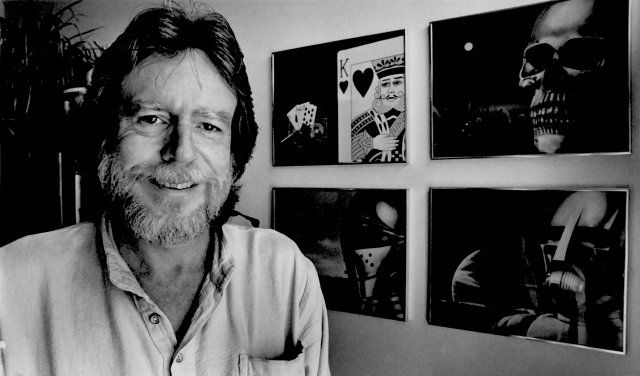
Before motorcycle culture had social media, action cameras, GPS tracks or hashtags, it had David Mann.
By: Andy Weightman / September 2026
There are artists who paint motorcycles beautifully, then there was David Mann.
Mann painted the motorcycle, sure. He could give a chopper impossibly long forks, a skinny front wheel and enough attitude to make you start mentally rearranging your garage. But the motorcycle was rarely the whole story.
Look at a David Mann painting long enough and your eyes eventually wander past the chrome. There's the road disappearing into nowhere. The mountains on the horizon. The woman riding along. The old-timer watching from the sidelines. The roadside repair that's probably being performed with three wrenches, a screwdriver and language unsuitable for children.
David Mann didn't simply paint motorcycles, he painted why people ride them.
And that's why, more than 20 years after his death, we're still talking about him.
BEFORE THE CHOPPERS
David Mann was born in Kansas City, Missouri, in 1940, and his first mechanical obsession wasn't motorcycles. It was cars. As a teenager he sketched automobiles and eventually worked pinstriping them. After high school, Mann headed west to California in a customized 1947 Chevy coupe.
Then he encountered chopped motorcycles. Game over.
He returned to Kansas, bought a 1948 Harley-Davidson, and began turning the motorcycle world around him into art. That eventually produced a watercolor called Hollywood Run.
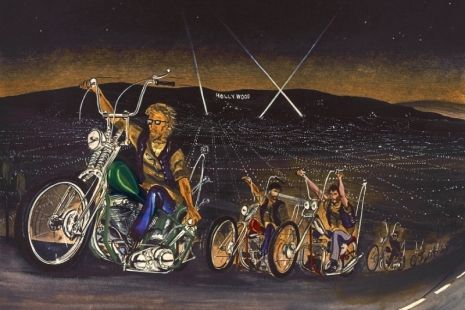
At the 1963 Kansas City Custom Car Show, Mann displayed the painting alongside his custom motorcycle. His bike was reportedly the only custom motorcycle entered, so the judges created a class and trophy for it. But the trophy wasn't the important part. The painting was.
A photograph of Hollywood Run eventually reached legendary artist and customizer Ed "Big Daddy" Roth, the creator of Rat Fink and publisher of Choppers magazine. Roth bought the painting, then he commissioned more. According to Mann's gallery biography, Mann ultimately created 14 works for Roth.
WANTED: SOMEONE WHO CAN DRAW CHOPPERS
Here comes one of those wonderfully perfect moments in history. In 1971, Easyriders magazine ran an advertisement looking for artists who were, in its words, "hip and can draw choppers." David Mann answered the ad. We can only assume the universe looked at the job description and said: Well... I've got a guy.
Mann submitted Frisco Nights, which appeared in the third issue of Easyriders.
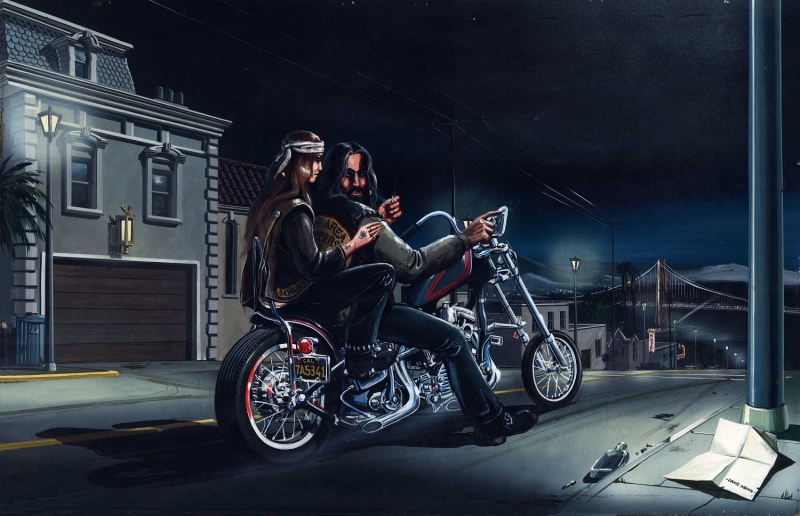
A relationship was born that would last roughly three decades. Beginning in 1973, Mann's paintings became famous centerfolds in Easyriders, appearing in nearly every issue until his retirement in 2003. For countless riders, opening the latest issue and finding a new Mann painting became part of motorcycle culture itself, there was another world waiting inside those pages.
THIS WASN'T AN OUTSIDER LOOKING IN
Mann wasn't an advertising executive trying to manufacture an image of what a "biker" should look like, He was one and knew the customs, personalities, motorcycles and unwritten rules of the world he was painting…And you can see it.
Mann understood those tiny details that someone outside motorcycle culture might miss, the posture of a rider standing beside his bike. The strange intimacy of working on somebody else's motorcycle on the shoulder of a highway. The quiet after everyone stops riding for the night. The glance between two riders, and most importantly, the road, The road was almost always another character.
THE BIKER'S NORMAN ROCKWELL
Mann eventually earned a wonderful unofficial nickname: "The Norman Rockwell of the biker world." Norman Rockwell captured little moments of American life, so did David Mann. Rockwell gave America barbershops, families, children and small-town scenes.
Mann's America contained Panheads, Shovelheads, roadside bars, campfires, questionable characters and motorcycles with front forks that occasionally appeared to be heading into the next county before the rider got there. But underneath all that machinery, both artists were doing something remarkably similar, they were telling stories about people.
THE END OF THE ROAD, BUT NOT THE STORY
After decades with Easyriders, declining health forced Mann to retire in 2003, then David Mann sadly died in 2004 at age 64. That same year, he was inducted into both the AMA Motorcycle Hall of Fame and the National Motorcycle Museum Hall of Fame. But something interesting happened after he was gone, the culture didn't let him disappear.
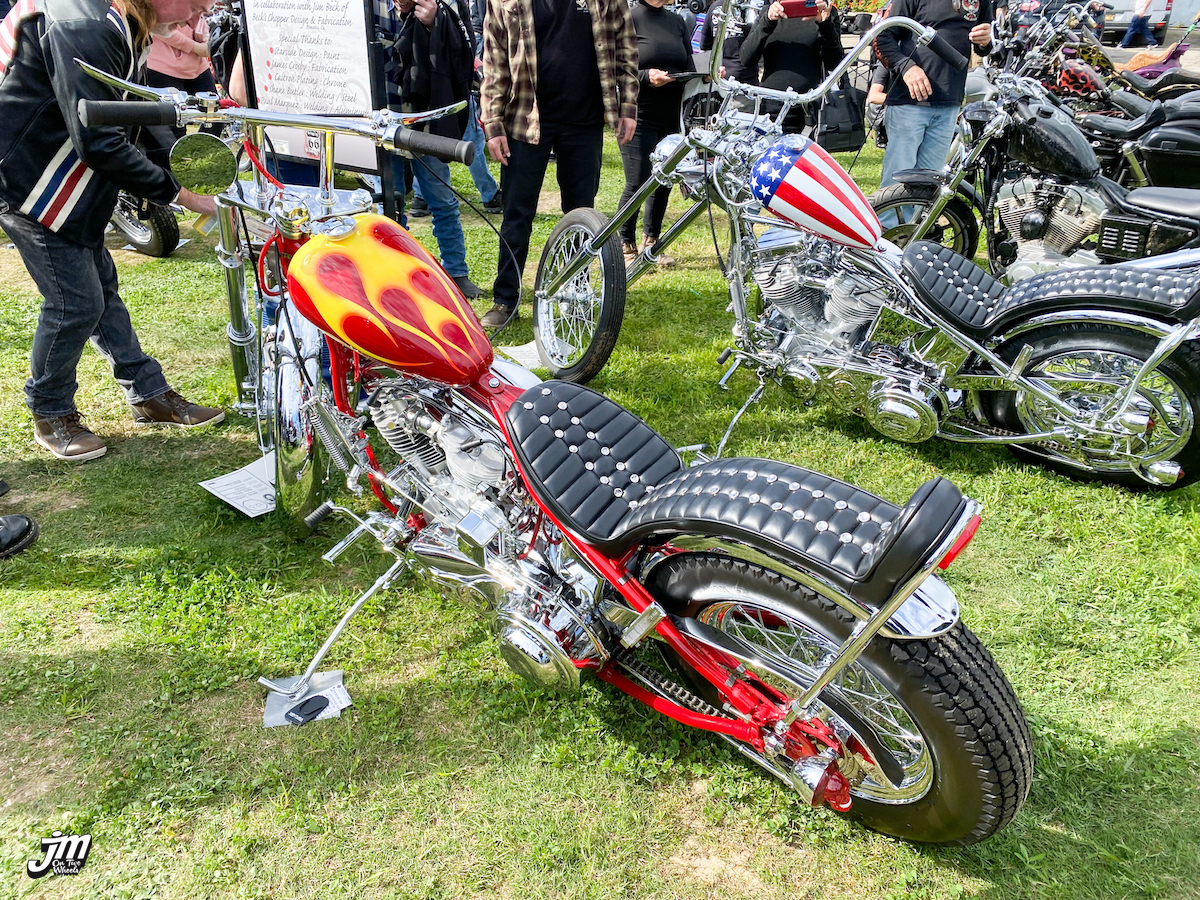
The David Mann Chopper Fest became an annual celebration of motorcycles, art, builders and the lifestyle his work documented. The event traces its roots to Ventura, California, and continues today and in a particularly fitting homecoming, Chopper Fest expanded to Kansas City, Mann's hometown. The second Kansas City edition is scheduled for September 19, 2026.
More than two decades after Mann's death, thousands of people are still gathering around custom motorcycles because of an artist who once propped a watercolor beside his bike at a Kansas City car show. That's a pretty spectacular legacy and the coolest way to look at David Mann's legacy is through his paintings. His paintings didn't stop when he put down the brush, they're still happening. Every time someone builds a motorcycle because they can't find one exactly the way they imagine it... Every time a rider stops somewhere they've never been before...or Every time someone chooses the winding road instead of the fast one...another little David Mann scene happens in real life..
So the next time you're riding and suddenly find yourself somewhere extraordinary, take a second before reaching for the phone, look around at the people you're with, look down that road and breathe in that freedom. Why? Because there's a pretty good chance David Mann would have understood exactly why you stopped and he probably would have wanted to paint it.
