Harley-Davidson vs. Indian
America's Motorcycle Rivalry Never Died
By: Andy Weightman / May 2024
Two names. More than a century of history. Two very different ideas of what an American motorcycle should be. And an argument riders still haven't settled.
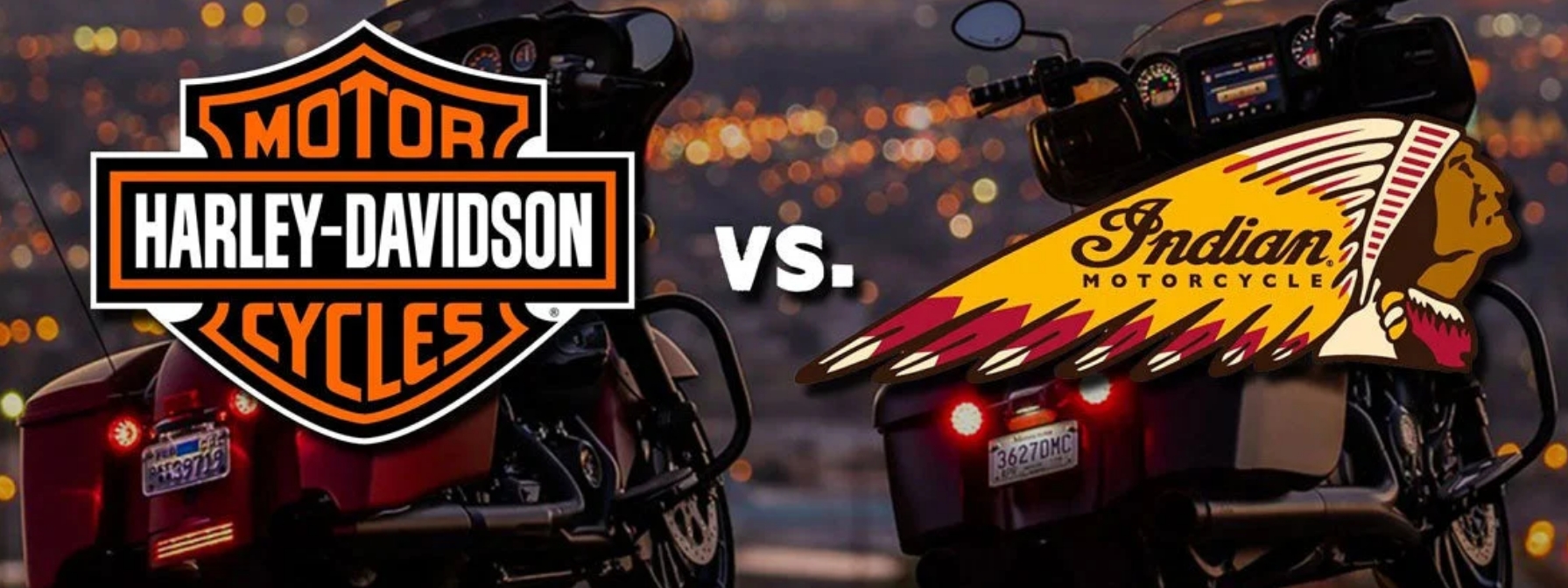
Park an Indian Chief Dark Horse next to a Harley-Davidson Low Rider S and something interesting happens.
Nobody just looks at the motorcycles.
Harley riders look at the Indian. Indian riders look at the Harley. Someone eventually wanders over, folds their arms and starts inspecting the other bike as though they're conducting a safety investigation.
Then comes the conversation.
"Yeah, but..."
And we're off.
More than 120 years after these two names first appeared on American motorcycles, Harley-Davidson and Indian are still capable of dividing a parking lot.
The strange thing is, the argument isn't really about horsepower.
It isn't about torque, suspension travel, infotainment screens or which motorcycle can knock a tenth of a second off a quarter-mile.
It's about identity and that's why this rivalry refuses to die.
Before There Was a Rivalry, There Were Two Motorcycles
Indian's story began in 1901, two years before Harley-Davidson arrived in 1903. Both companies were there near the beginning of the American motorcycle itself.
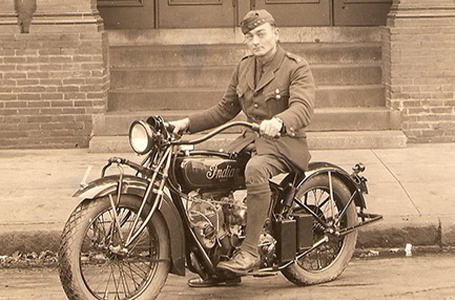
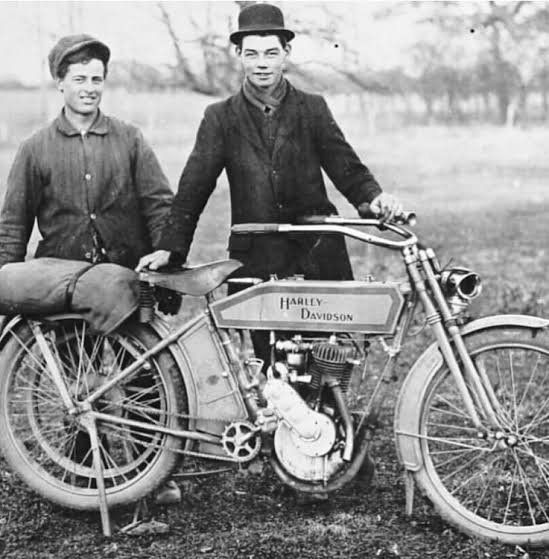
Before interstate highways, before Sturgis became Sturgis, before leather vests covered in patches and before anyone argued about exhaust pipes on the internet, Harley and Indian were racing, innovating and competing for American riders.
Indian became a powerhouse. So did Harley.
They raced each other. They competed for police and military contracts. They fought for dealerships and customers and they built motorcycles that helped define what an American motorcycle was supposed to look and sound like. But their stories eventually took dramatically different roads. Indian's original operation collapsed in the 1950s and Harley survived. That distinction matters, because for decades, there really wasn't an Indian versus Harley rivalry anymore.
There was Harley-Davidson and Harley used those decades to build something far bigger than a motorcycle company. It built a culture.
Harley Didn't Just Sell Motorcycles
This might be Harley-Davidson's greatest achievement. You don't simply buy a Harley, you enter a family and lifestyle.
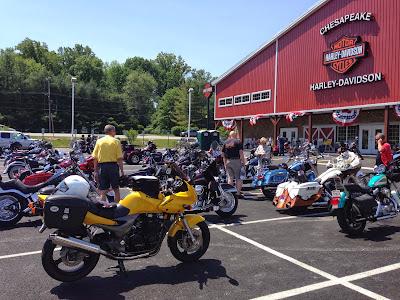
Dealerships. H.O.G. chapters. Rallies. Apparel. Poker runs. Charity rides. Bike nights. Custom shops. Parts catalogs thick enough to stop a door.
A rider can buy a Harley in Washington, ride it across Montana, Wyoming, South Dakota and halfway across the country and rarely be far from somebody who knows exactly what he's riding… and then there is customization.
Harley-Davidson may have accidentally created one of the strangest traditions in motorcycling:
Buying a perfectly functional motorcycle and immediately replacing half of it.
Pipes, Bars, Seats, Wheels, Suspension, Fairings, Air cleaner, Tuners, Chrome and black parts to replace the chrome.
Then occasionally chrome parts to replace the black parts somebody previously bought to replace the chrome. It's glorious insanity and the aftermarket surrounding Harley-Davidson is enormous.
Indian simply hasn't had the uninterrupted decades necessary to build anything comparable. But Indian came back with another weapon.
The Comeback Kid
The modern Indian Motorcycle didn't try to beat Harley by pretending the previous 60 years hadn't happened. It came back swinging.
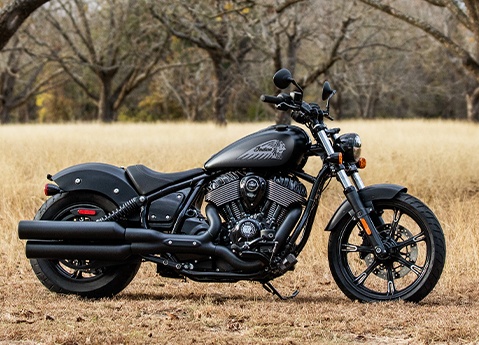
Under Polaris ownership, Indian began building motorcycles that respected the company's history while being perfectly willing to use modern technology and that's where motorcycles such as the Chief Dark Horse become interesting.
Look at one. The massive V-twin is still the centerpiece. The silhouette still belongs unmistakably to an American cruiser, but everything around it feels slightly different.
Blacked-out finishes. Modern instrumentation. Ride modes. Electronic features. Contemporary suspension and chassis engineering, Indian hasn't abandoned heritage it has simply decided heritage doesn't require pretending it's still 1948.
And then there are motorcycles like the Pursuit Dark Horse, where Indian pushes even harder toward the modern performance-touring end of the spectrum.
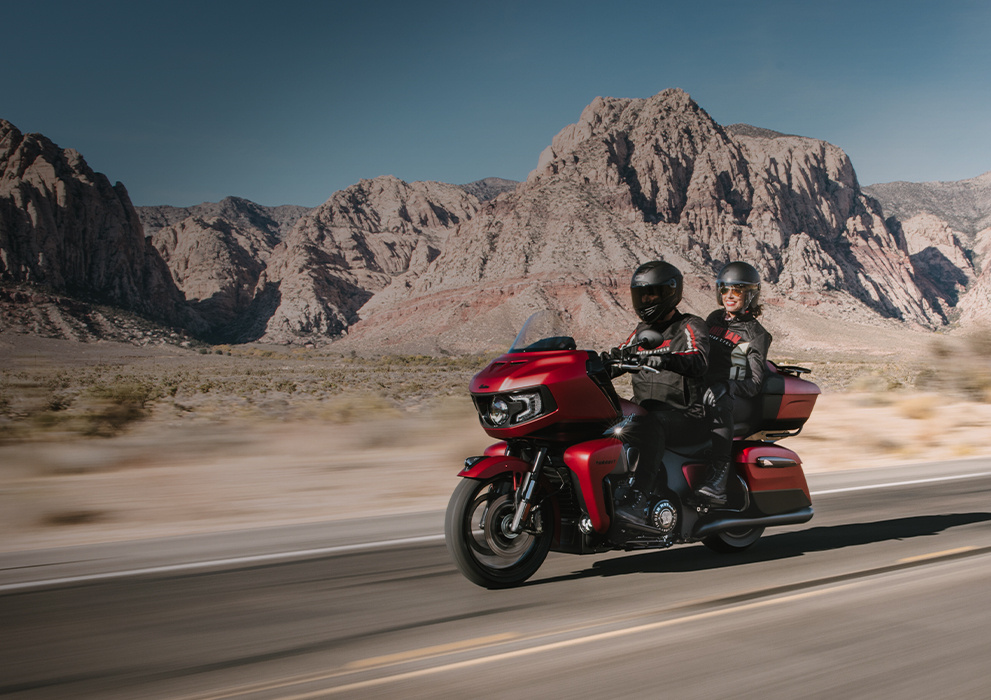
That's where this rivalry becomes much more interesting than "Which one makes more horsepower?"
Because Harley and Indian are now approaching the same rider from two slightly different directions.
The Parking-Lot Test
Forget the specifications for a moment, imagine two motorcycles sitting outside a bar.
Indian Chief Dark Horse.
Harley-Davidson Low Rider S.
Both American, both big V-twins, both motorcycles that look slightly irritated even when they're turned off. Which one do you walk toward first? That's a more revealing question than you'd think.
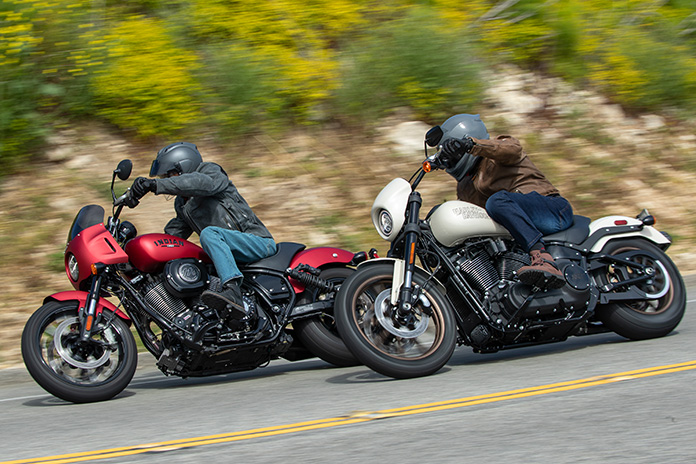
The Harley carries something incredibly difficult to quantify. Recognition.
You know what it is before you read the tank. The engine architecture, stance and sound connect the motorcycle to generations that came before it.
There's a deliberate mechanical personality to a Harley V-twin. Modern Harleys are far more sophisticated than the stereotypes suggest, but Harley understands that some imperfections aren't necessarily problems.
Sometimes they're character and Indian tends to feel different.
Depending on the model, it can feel smoother, more planted and more overtly modern. Indian has been willing to integrate technology without worrying quite as much about whether somebody thinks a touchscreen violates the Constitution, but neither approach is wrong. They're simply different interpretations of the same idea.
Then You Actually Ride Them
This is where brand loyalty needs to wait back at the dealership.
Harley's big twins deliver the low-end shove cruiser riders love. Roll the throttle open and the motorcycle doesn't need to scream toward redline to tell you something is happening.
There's torque underneath you immediately and Indian understands exactly the same language.
But across its lineup, Indian has also shown a willingness to use liquid cooling and more performance-oriented engine designs where appropriate, while other Indian models retain traditional air-cooled architecture.
Harley has similarly expanded beyond purely traditional air-cooled designs, so the old shorthand of:
Harley = old technology
Indian = modern technology
doesn't really hold up anymore. Both companies are modern motorcycle manufacturers, they're simply choosing where to hide the technology differently and that might be the most interesting difference between them.
Harley's Secret Weapon Isn't an Engine
It's the people. You can compare motorcycles all day, but Harley-Davidson possesses something Indian can't manufacture overnight. Generations… fathers rode Harleys, grandfathers rode Harleys. People remember the Harley their uncle had in the garage when they were eight years old.
Somebody remembers hearing one leave the neighborhood and deciding right then that motorcycles were going to become part of their life, that kind of loyalty isn't created by a marketing department, it accumulates.
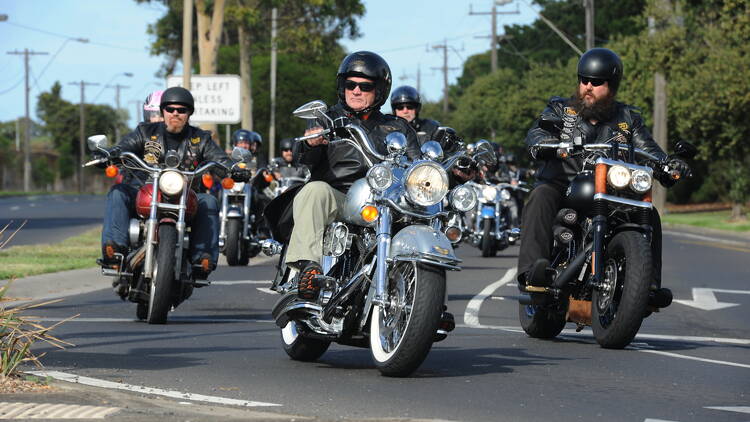
Walk into the right Harley dealership and it feels less like a vehicle showroom and more like a clubhouse that happens to have motorcycles for sale.
That community is real and if we're going to compare these brands fairly, it deserves just as much consideration as horsepower, because people don't ride motorcycles solely to get somewhere. If transportation were the objective, we'd all drive beige crossovers and quietly die inside. Motorcycles give us something else… freedom!
But Indian Has Its Own Appeal
There is something satisfying about pulling into a parking lot full of Harleys on an Indian.
Not because you're trying to antagonize anybody. Okay...Maybe a little, but mostly because Indian remains unusual enough to make people look.
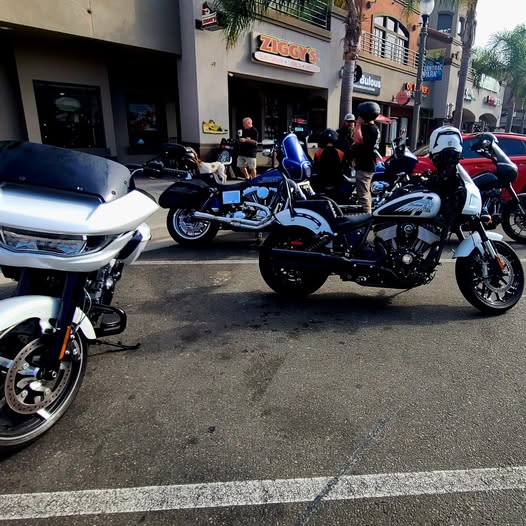
A Chief Dark Horse has presence, a Pursuit Dark Horse looks purposeful and the fact that the tank says INDIAN carries more historical weight than younger riders sometimes realize.
This isn't some motorcycle company invented by a marketing department twenty years ago, that name was there at the beginning. It disappeared, it stumbled through multiple attempted revivals and somehow it came back. There's something wonderfully American about that story.
Take the Badges Off
So here's the experiment. Forget Harley. Forget Indian. Forget what your buddies ride. Put two comparable motorcycles beside each other. Then remove the badges. Which one would you choose?
The one that handles better, that's more comfortable with better technology? How about the one you can customize endlessly… or simply the one you turn around and look at after parking? Because motorcycles aren't entirely rational purchases.
So Who Wins?
We're not giving you that answer, sorry… Because declaring Harley-Davidson or Indian the winner misses the entire point. Harley carries an uninterrupted motorcycle culture no other American manufacturer can reproduce.
Indian carries one of America's oldest motorcycle names and has returned with machines capable of standing beside Harley without apologizing for being different.
One represents survival. The other represents resurrection and somehow, after more than 120 years, they're standing across from one another again.
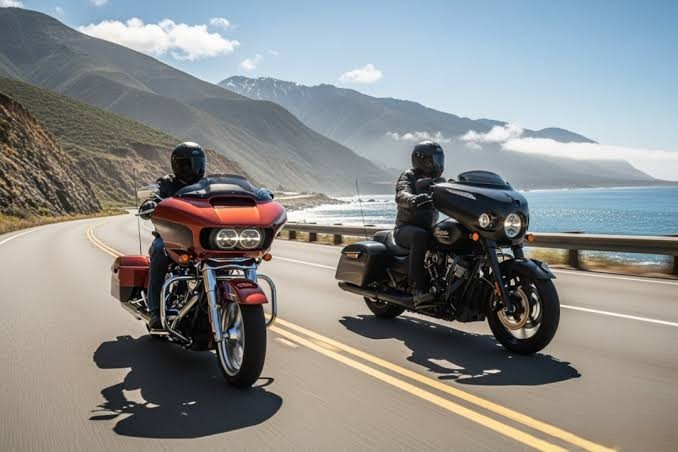
Maybe the winner isn't Milwaukee, maybe it isn't Spirit Lake, I would say it's us.
Because more than a century after this argument started, two American motorcycle companies are still building machines capable of making grown adults stand around a parking lot debating engines, horsepower, exhaust notes and whose motorcycle they'd rather ride home and frankly...that's exactly how it should be.
ON2
PICK A SIDE. OR DON'T. JUST RIDE.